
Peyronie’s Disease in Younger Men: Early Warning Signs You Shouldn’t Ignore
Most men assume Peyronie’s disease is something that only happens to older men. It gets lumped in with other age-related health concerns, quietly dismissed as a distant worry. But that assumption can delay diagnosis and treatment at a time when acting early makes the biggest difference.
The reality is that Peyronie’s disease can and does affect younger men, including those in their 20s and 30s. When it shows up at this stage of life, it often catches men completely off guard.
They may not recognize what they’re experiencing, or feel too embarrassed to bring it up with a
doctor, or simply not know that effective, non-surgical options exist.
This article is for any younger man who suspects something isn’t quite right and wants real, straightforward information, not alarm or shame.
What Is Peyronie’s Disease and Why Does It Matter at a Young Age
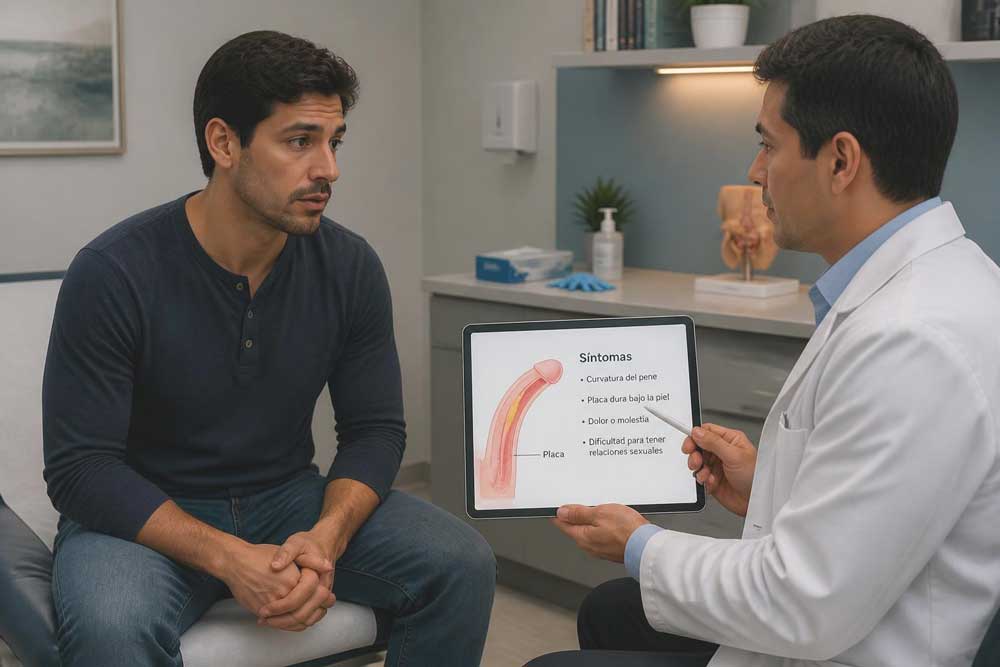
Peyronie’s disease is a condition where scar tissue, called a plaque, forms beneath the skin of the penis. This plaque is not a tumor or anything cancerous. However, it causes the tissue to lose its flexibility, which leads to a noticeable curve or bend during an erection. In some cases, it also causes pain, shortening, or difficulty with penetration.
The condition is caused by injury or repeated microtrauma to penile tissue, which triggers an abnormal healing response. Instead of healing cleanly, the tissue forms fibrous scar tissue that doesn’t stretch the way healthy tissue should.
In younger men, this injury often goes unnoticed in the moment. Vigorous or awkward sexual activity, athletic strain, or even certain sports can cause this kind of internal tissue damage without any obvious external sign. By the time symptoms appear, weeks or even months may have passed since the original injury.
Catching Peyronie’s disease early matters because the condition has two distinct phases. The acute phase is the earlier, active stage where the plaque is still forming, inflammation is present, and the curvature may be changing. The chronic phase follows once the plaque has stabilized. Treatment during the acute phase tends to produce better results and may prevent the condition from progressing further.
Early Warning Signs of Peyronie’s Disease in Younger Men
Unusual Pain During Erections
One of the earliest signs many young men report is pain or discomfort during an erection, even when no sexual activity is taking place. This can feel like a dull ache, tightness, or a sharper sensation localized to one area of the shaft.
Because this symptom doesn’t always come with visible changes, it’s easy to dismiss as a minor issue or strain. But persistent pain during erections that wasn’t there before is worth paying attention to. It often signals active inflammation in the tissue, which is a hallmark of early-stage Peyronie’s disease.
A New Curve or Bend in the Erect Penis
This is the symptom most commonly associated with Peyronie’s disease. However, it’s important to understand that not all curvature is a problem. Many men have a naturally slight curve that has been present since puberty. That is called congenital curvature and is unrelated to Peyronie’s.
What you’re looking for is a new bend, one that wasn’t there before. It may appear gradually over several weeks or months, or it may seem to show up more suddenly. The direction of the curve can vary and depends on where the plaque has formed. Some men notice an upward bend, others a downward or lateral curve.
If you find yourself comparing your current erection to how things looked six months ago and noticing a meaningful difference, that’s a signal worth investigating.
A Hard Lump or Thickened Area Under the Skin
In some cases, men can feel a firm, localized area along the shaft of the penis when it’s flaccid.
This is often the plaque itself. It may feel like a ridge, a small hardened nodule, or a general area of reduced flexibility compared to the surrounding tissue.
This finding is significant because it’s one of the more concrete physical indicators of Peyronie’s disease. A urologist can typically confirm the presence of plaque during a physical examination.
Penile Shortening or Narrowing
Some younger men notice that their erect penis looks or feels shorter than it used to, or that there’s an indentation or narrowing at a particular point along the shaft. This is sometimes described as an “hourglass” appearance in more advanced cases.
Shortening occurs because the inelastic plaque restricts the expansion of the tissue on one side. As the healthy tissue expands normally during an erection, the scarred side cannot keep up, pulling the penis toward that side and effectively compressing its length.
This symptom tends to cause significant distress, particularly in younger men, and it’s one of the reasons early intervention is so important.
Erectile Difficulties That Seem Unexplained
Peyronie’s disease doesn’t just affect the shape of the penis. It can also interfere with erectile function. The plaque can impede normal blood flow, and the pain or anxiety associated with the condition frequently compounds the problem.
For younger men who don’t have other known risk factors for erectile dysfunction, unexplained difficulties maintaining an erection may be connected to early Peyronie’s disease, particularly if they occur alongside any of the other symptoms listed above. According to research published by the National Institutes of Health, a meaningful proportion of men with Peyronie’s disease also report some degree of erectile dysfunction, even in younger age groups.
Why Younger Men Often Wait Too Long to Seek Help
The delay in seeking diagnosis is one of the most common and damaging patterns in Peyronie’s disease. Younger men in particular tend to stay silent for several reasons.
Embarrassment plays a significant role. Sexual health is still a topic many men find difficult to discuss openly, even with a doctor. There’s a fear of judgment, a reluctance to describe intimate symptoms, and sometimes a sense that the issue might resolve on its own.
There’s also a lack of awareness. Many younger men have never heard of Peyronie’s disease.
They may assume what they’re experiencing is normal variation, a temporary problem, or something unrelated to any diagnosable condition.
The result is that by the time a man does seek help, he may already be in the chronic phase, where scar tissue is fully formed and harder to address. That’s not to say treatment is impossible at that stage, but starting earlier gives the body more to work with.
Risk Factors That Make Younger Men More Vulnerable
While age remains a common factor, it doesn’t protect younger men from developing Peyronie’s disease. Certain risk factors increase the likelihood regardless of age.
- Connective tissue disorders such as Dupuytren’s contracture, a condition affecting the hand, are associated with a higher risk of Peyronie’s disease. If you have a family history of Dupuytren’s contracture or Peyronie’s disease, you may be more predisposed than average.
- Genetic predisposition also plays a role. Men with close relatives who have had Peyronie’s disease are at elevated risk.
- Penile trauma is probably the most direct risk factor in younger men. This includes injury during sexual activity, which can happen more easily than most people realize. A buckling sensation, an unusual angle during intercourse, or even repeated friction over time can initiate the abnormal scar formation process.
- High-intensity physical activity that creates repeated lower-body strain or trauma may also contribute in some cases, though this is less well-documented than direct penile injury.
What to Do If You Recognize These Signs
The first step is a conversation with a urologist. This doesn’t have to be a major event. It’s a routine medical consultation, and a specialist in urology deals with these concerns regularly. You won’t be saying anything they haven’t heard before.
A urologist will typically conduct a physical examination, review your symptoms, and may use ultrasound imaging to assess the plaque and blood flow. From there, they can confirm whether Peyronie’s disease is the cause and discuss where you are in the disease progression.
The good news is that non-invasive treatment options have improved considerably. Penile traction therapy, for example, has a growing evidence base and is increasingly recommended as part of a first-line approach, particularly during the acute phase. It works by applying gentle, consistent tension to the penile tissue, which can help slow plaque development, reduce curvature, and, in some cases, partially restore length.
Andromedical develops traction-based devices like Andropeyronie for this purpose. Peyronie’s disease treatment options reflect a clinically grounded, non-surgical strategy aligned with current medical practice and are worth exploring if you want options beyond medication.
The Psychological Impact Younger Men Often Underestimate
It would be incomplete to discuss Peyronie’s disease in younger men without acknowledging the emotional weight that often comes with it. The condition affects self-confidence, intimate relationships, and mental health in ways that are deeply personal.
Younger men may feel a disproportionate sense of loss or anxiety because sexual identity and physical confidence often carry more urgency at this stage of life. Feelings of inadequacy, withdrawal from relationships, and performance anxiety are all real consequences that many men experience but rarely talk about.
Recognizing that these emotional responses are normal and that they are connected to a treatable medical condition is an important step. Addressing the physical condition often brings significant psychological relief alongside it.
Why Early Action Changes the Outcome
Peyronie’s disease is not a condition that simply goes away on its own in most cases. While some men do experience spontaneous improvement, a significant number see their symptoms stabilize or worsen without intervention.
Early treatment during the acute phase is generally associated with better outcomes in terms of curvature reduction and symptom management. The tissue is still in a more responsive state, and interventions like traction therapy can work with the body’s ongoing healing process rather than against established scar tissue.
Waiting is understandable, but it carries a real cost. The sooner you have an honest conversation with a specialist and begin a structured approach to treatment, the more options you have and the better your likely outcomes.
Conclusion
Peyronie’s disease in younger men is more common than most people realize, and the early warning signs are often subtle enough to be dismissed or misunderstood. Pain during erections, a new curve, a palpable lump, penile shortening, or unexplained erectile difficulties are not things to push aside and hope resolve on their own.
You deserve clear information and real options, not vague reassurance. If anything in this article resonates with what you’ve been experiencing, the most important next step is to consult a urologist. From there, understanding your non-invasive options, including medically designed traction devices and structured treatment protocols, puts you in a position of control rather than uncertainty.
Andromedical exists to support exactly this kind of informed, proactive approach to men’s health. Whether you’re in the early stages of noticing symptoms or looking for a structured plan, their team and their products are built around real clinical evidence and genuine care for patient outcomes. Don’t let embarrassment or uncertainty be the reason you wait too long. Reach out to Andromedical now.