
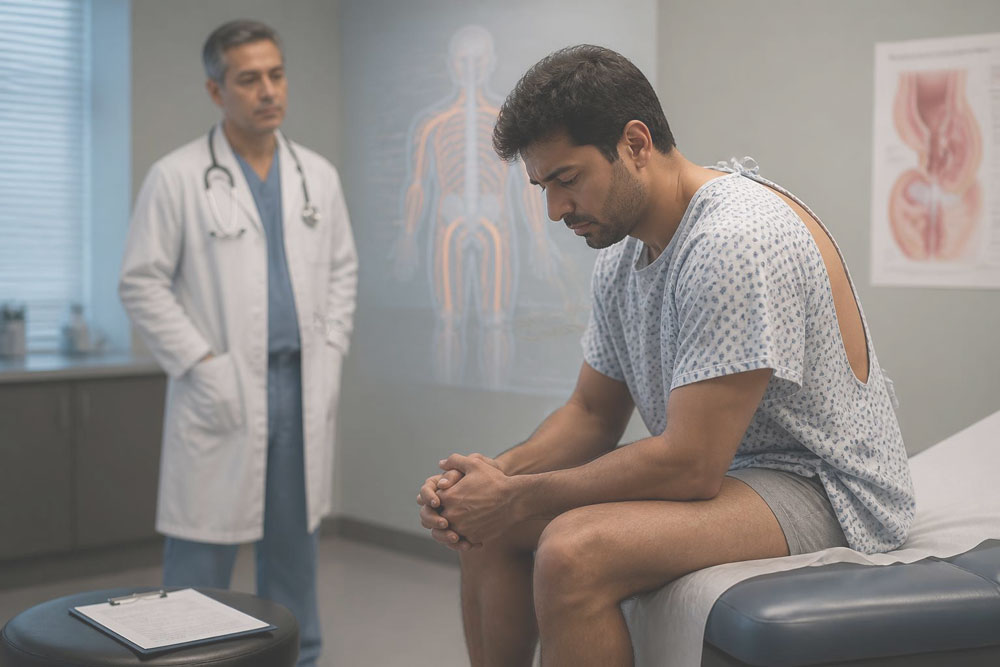
Performance Anxiety and Erectile Dysfunction: How Stress Can Affect Erections
There are moments when the mind and body simply refuse to cooperate, and few experiences feel as isolating as being unable to get or maintain an erection when you want to. If this has happened to you, you are far from alone. Performance anxiety is one of the most common psychological causes of erectile dysfunction, yet it remains one of the least talked about. Men tend to suffer in silence, assuming something is permanently wrong, when in many cases the problem starts entirely in the mind.
Understanding the link between stress, anxiety, and erections is not just reassuring. It is the first step toward doing something about it.
What Is Performance Anxiety, Exactly?
Performance anxiety in a sexual context refers to the worry or fear about how you will perform during sex. It can show up before intimacy even begins, or it can creep in mid-encounter and derail everything. The trigger might be a previous experience that did not go well, concern about satisfying a partner, self-consciousness about your body, or a general sense of pressure to “perform.”
The tricky thing is that the anxiety itself becomes the problem. You are not physically broken.
Your body is simply caught in a loop where fear generates a stress response that directly interferes with erections.
How Stress Physically Blocks an Erection
To understand why anxiety causes erectile dysfunction, you need to know a little about how erections actually work. An erection depends on blood flow. When you are aroused, your brain sends signals that relax the smooth muscle tissue in the penis, allowing blood to rush in and create the firm, sustained erection you need.
Stress throws a wrench into this process at multiple points.
When you are anxious, your body activates the sympathetic nervous system, often called the “fight or flight” response. This system releases stress hormones like adrenaline and cortisol.
These hormones cause blood vessels to constrict, which is the opposite of what an erection needs. Instead of blood flowing into the penile tissue, the body redirects it to large muscle groups in preparation for a perceived threat.
In other words, your brain treats the pressure of sexual performance the same way it would treat a physical danger. The result is that the arousal signals your brain needs to send are blocked before they can do their job.
The Anxiety-ED Feedback Loop
One of the most frustrating aspects of performance anxiety is that it tends to feed itself. A man experiences difficulty with an erection once, perhaps due to stress, fatigue, or alcohol. Instead of chalking it up to circumstance, he starts to worry it will happen again. That worry then increases stress, which makes erectile dysfunction more likely, which deepens the anxiety further.
This cycle can persist long after the original trigger has resolved. What started as a one-off event can become a pattern that feels physical but is rooted in psychology. Men often describe it as “being in their own head,” unable to relax enough to be present in the moment.
Recognizing this cycle is not about dismissing the problem. It is about understanding that the solution may not be physical at all, or it may involve addressing both the mind and the body at the same time.
Who Is Most Vulnerable to Performance Anxiety?
Performance anxiety does not discriminate by age or experience. Younger men in new relationships may feel intense pressure to impress. Older men returning to sexual activity after a long gap may fear that age has diminished their ability. Men in long-term relationships can develop performance anxiety if intimacy has become infrequent or strained.
According to research published by the National Library of Medicine, psychological factors are estimated to contribute to anywhere from 15 to 20 percent of all erectile dysfunction cases, with performance anxiety being a leading factor among younger men specifically. That figure alone challenges the assumption that ED is primarily a physical issue.
High-stress professions, relationship conflict, body image concerns, and even excessive consumption of pornography have all been linked to performance anxiety. Each of these creates a mental environment where relaxation and arousal are difficult to achieve simultaneously.
When Stress and Physical ED Overlap
It is important to acknowledge that performance anxiety and physical erectile dysfunction are not always separate issues. For many men, they exist together, making it harder to identify what is actually happening.
A man with mild cardiovascular issues may experience occasional difficulty with erections. That experience creates anxiety about performance. The anxiety then amplifies the physical dysfunction, making erections harder to achieve even on days when his cardiovascular system is functioning well. In this way, a manageable physical issue can become significantly worse because of the psychological layer sitting on top of it.
This overlap is why a thorough evaluation, ideally with a healthcare provider who understands both the physical and emotional dimensions of men’s health, is so valuable. Treating only one side of the equation often produces incomplete results.
Practical Strategies for Managing Performance Anxiety
There is no single cure for performance anxiety, but there are several evidence-informed approaches that genuinely help. These are not quick fixes, but they work when applied consistently.
- Cognitive Behavioral Therapy (CBT) is one of the most well-supported interventions for psychological ED. A therapist helps you identify the specific thoughts that fuel your anxiety and gradually replace them with more balanced perspectives. This is not about positive thinking. It is about restructuring how your brain responds to sexual situations.
- Mindfulness and breathwork are powerful tools because they directly counteract the fight-or-flight response. Practices like slow diaphragmatic breathing lower cortisol levels and encourage the parasympathetic nervous system, the “rest and digest” state, to take over. This is the state the body needs to sustain an erection.
- Open communication with your partner can dramatically reduce performance pressure. When both partners understand what is happening, sex becomes less of a test and more of a shared experience. Many couples find that removing the explicit goal of intercourse for a period, a technique called sensate focus, helps rebuild comfort and arousal without the weight of expectation.
- Reducing lifestyle stressors plays a significant role as well. Regular exercise, adequate sleep, and reduced alcohol consumption all support both mood regulation and healthy erectile function. Chronic stress from work or relationships does not stay confined to those areas. It spills into the bedroom whether you want it to or not.
When Psychological Support Is Not Enough
For some men, addressing the mental dimension of performance anxiety helps resolve the issue entirely. For others, especially those dealing with both psychological and physical factors, additional support is needed.
This is where medical devices designed for erectile dysfunction can play a meaningful role.
Vacuum pump therapy, for instance, is a clinically recognized, non-invasive treatment that helps men achieve erections mechanically, independent of the anxiety response that might otherwise prevent one. Over time, consistent use can help rebuild confidence, restore a sense of normalcy, and reduce the psychological pressure surrounding sexual performance.
At Andromedical, the Androvacuum is designed exactly with this in mind. It is a medical-grade vacuum pump engineered to support men with erectile dysfunction in a safe, controlled way. For men who want to understand how to incorporate this kind of therapy effectively, exploring erectile dysfunction treatments is a practical next step.
Used as part of a broader approach, one that also addresses the psychological roots of performance anxiety, devices like the Androvacuum can help men regain both function and confidence without medication or surgery.
Separating Myth from Reality
There are a lot of misconceptions surrounding performance anxiety and ED that are worth clearing up.
- Myth: It only happens to older men. Reality: Performance anxiety is actually more common in younger men, particularly those under 40, where psychological causes outweigh physical ones.
- Myth: If it happens once, it will always happen. Reality: A single episode of difficulty does not predict a pattern. Without the layer of anxiety, many men return to normal function without any intervention.
- Myth: You just need to relax. Reality: Telling someone to “just relax” rarely helps and can increase frustration. Effective management requires specific strategies, not just willpower.
- Myth: ED means something is permanently wrong. Reality: Many men experience temporary periods of erectile difficulty related entirely to stress or circumstance. When addressed properly, these periods often resolve.
The Role of Hormones and Long-Term Stress
It is worth briefly addressing what chronic stress does to the body over time, because the damage is not always immediate. Sustained elevated cortisol levels suppress testosterone production. Testosterone plays a direct role in libido and contributes to the ease with which arousal occurs. When testosterone drops, the threshold for sexual excitement rises, meaning it takes more stimulation to achieve the same response.
This is why men who have been under prolonged stress for months or years may notice a gradual decline in sexual interest and function, not just occasional difficulty. Addressing stress at its root, whether through therapy, lifestyle change, or medical evaluation, matters not just for individual encounters but for long-term sexual health.
Taking the First Step
Performance anxiety and erectile dysfunction are not character flaws. They are responses to real psychological and physiological pressures, and they deserve real solutions. The fact that they are common does not make them any less disruptive, and the fact that they are treatable does not mean the path forward is obvious.
If you have been struggling in silence, the most important thing you can do is start the conversation with yourself, with a partner, with a healthcare provider, or with a company like
Andromedical, which understands men’s health without judgment.
Andromedical exists to support men at exactly this kind of crossroads. Whether you are exploring medical-grade devices like the Androvacuum, looking for guidance on treatment options, or simply trying to understand what your body is doing and why, the team at
Andromedical is equipped to help. You can reach them directly at 646-568-7796 to discuss your situation and find out what approach makes the most sense for you.