
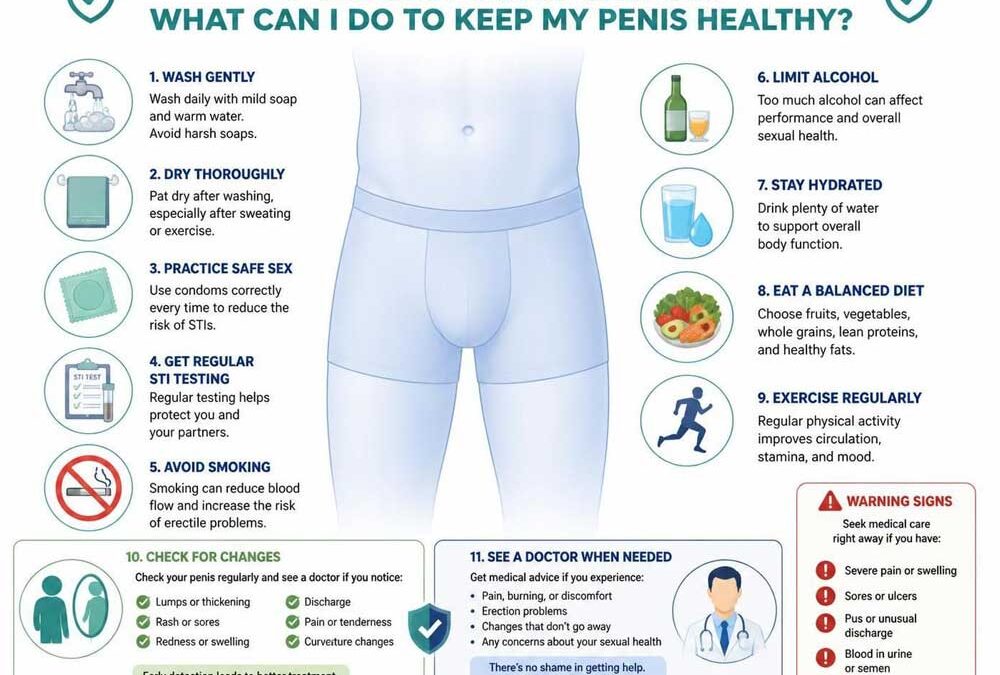
Penis Health: What Can I Do to Keep My Penis Healthy?
Most men think about their penis health only when something goes wrong. A bit of discomfort, a noticeable change, or a performance issue suddenly gets their attention. But like any other part of your body, the penis responds well to consistent care, and neglecting it can quietly set the stage for bigger problems down the road.
The good news is that keeping your penis healthy does not require a complicated routine. It starts with understanding what affects it, recognizing the warning signs of trouble, and making a few practical choices every day.
Why Penis Health Matters More Than Most Men Realize
Penis health is not just about sexual performance, though that is certainly part of it. It is closely tied to your cardiovascular health, hormonal balance, mental well-being, and overall quality of life. The penis is a vascular organ, which means it relies on healthy blood flow to function properly. When your heart, arteries, or hormones are under stress, the penis is often one of the first places it shows.
Conditions like erectile dysfunction, Peyronie’s disease, and reduced sensitivity are not random.
They frequently develop as a result of lifestyle factors, circulatory issues, or physical changes over time. The earlier you pay attention, the more options you have.
The Basics: Daily Habits That Support Penis Health
Keep It Clean
Good hygiene is the foundation. Wash the penis daily with warm water and mild soap, making sure to clean under the foreskin if you are uncircumcised. Buildup of bacteria or smegma in that area can cause irritation, odor, and in some cases, infection.
Avoid using heavily scented soaps or harsh products directly on sensitive skin. The genital area is more delicate than most people treat it.
Protect It During Sex
Sexually transmitted infections (STIs) are a real threat to penis health, and many do not present obvious symptoms right away. Using condoms consistently with new or multiple partners significantly reduces your risk. Regular STI screenings are equally important – not just for protection, but for peace of mind.
Rough or aggressive sexual activity can also cause minor tears, penile fracture (in rare but serious cases), or cumulative microtrauma that contributes to scar tissue over time. Being aware of how physical stress affects the tissue matters more than most men acknowledge.
Stay Active and Watch Your Circulation
Blood flow is everything when it comes to erectile function and tissue health. Regular aerobic exercise – even 30 minutes of brisk walking most days – does more for your penis than most supplements ever will. Exercise supports healthy testosterone levels, reduces the risk of cardiovascular disease, and keeps your arteries functioning well.
According to the Mayo Clinic, lifestyle factors such as smoking, excessive alcohol use, and obesity are directly linked to erectile dysfunction and other penile health issues. That is not a coincidence – it is cause and effect.
Nutrition, Weight, and Hormone Health
What you eat affects what happens below the waist. A diet high in processed foods, sugar, and saturated fat damages blood vessels over time, reducing circulation throughout the body, including to the penis.
Focus on whole foods – leafy greens, lean proteins, healthy fats, and plenty of water. Some research points to specific nutrients like zinc, L-arginine, and vitamin D as beneficial for male sexual health, though they work best as part of an overall healthy diet rather than a standalone fix.
Weight also matters. Excess abdominal fat can lower testosterone levels and reduce the visible length of the penis due to the pubic fat pad that surrounds its base. Losing even a modest amount of weight can have a noticeable effect on both appearance and performance.
Recognizing Common Penis Health Problems
Erectile Dysfunction
Erectile dysfunction (ED) affects millions of men and becomes more common with age, but it is not inevitable. If you are consistently having difficulty achieving or maintaining an erection, it is worth talking to a doctor. ED is frequently a symptom of an underlying issue – not just a standalone problem.
Peyronie’s Disease
Peyronie’s disease involves the development of scar tissue (plaque) inside the penis, which can cause painful erections, a noticeable curve or bend, and in some cases, difficulty with intercourse. It develops gradually, often following unnoticed trauma, and can worsen without treatment.
Medical devices that apply gentle traction have been shown to help manage this condition by slowly breaking down scar tissue and encouraging straighter, healthier tissue growth. It is worth knowing that non-surgical options exist and are clinically supported.
Changes in Skin or Sensation
Unusual spots, sores, lumps, or changes in skin color should never be ignored. While many minor skin issues are harmless, some can indicate infections, dermatological conditions, or, in rare cases, early signs of penile cancer. If something looks different and does not resolve within a week or two, see a doctor.
When Lifestyle Changes Are Not Enough
Sometimes, doing everything right is not enough to fully address a penis health concern. That is especially true for structural issues like Peyronie’s disease or size-related concerns that have a physical cause.
This is where medically developed devices can play a meaningful role. Penile traction devices, for example, work by applying consistent, controlled tension to the penile tissue over time, stimulating cellular growth and tissue remodeling. This is the same basic principle used in orthopedics for bone lengthening and post-surgical recovery.
If you are exploring options for size improvement, understanding how to increase penile size and strength through clinically validated methods is a practical starting point. It is not about quick fixes – it is about consistent, medically sound approaches that produce real results over time.
Mental and Emotional Dimensions of Penis Health
It would be incomplete to talk about penis health without addressing the mental side. Anxiety about size, performance, or appearance is extremely common, and in many cases, it becomes a self-fulfilling issue. Stress and anxiety are known contributors to erectile dysfunction and reduced libido.
Talking openly – whether with a healthcare provider, therapist, or a trusted partner – can break a cycle that purely physical treatments cannot. Mental health is not separate from sexual health; they are tightly linked.
Regular Check-Ins With a Healthcare Provider
Men tend to avoid medical appointments unless something is clearly broken. But regular check-ins with your doctor – including testosterone panels, STI screenings, and cardiovascular assessments – give you a clearer picture of where your health stands.
If you notice changes in sexual function, discomfort, or anything that does not feel right, do not wait for it to resolve on its own. Early intervention almost always leads to better outcomes.
Simple Steps to Keep Your Penis Healthy
Taking care of your penis is not complicated, but it does require some intentionality. Clean habits, regular exercise, a balanced diet, safe sex, and an honest relationship with your healthcare provider cover most of the foundation.
When additional support is needed – whether for a structural condition, size concerns, or recovery after surgery – there are medically sound, non-invasive options designed specifically for that purpose. Understanding what is available and approaching it with the same seriousness you would give any other health concern is the right mindset.
If you are ready to explore evidence-based solutions, take the first step and learn about how to Increase Penile Size and Strength through methods that are clinically supported and designed with your long-term health in mind.