
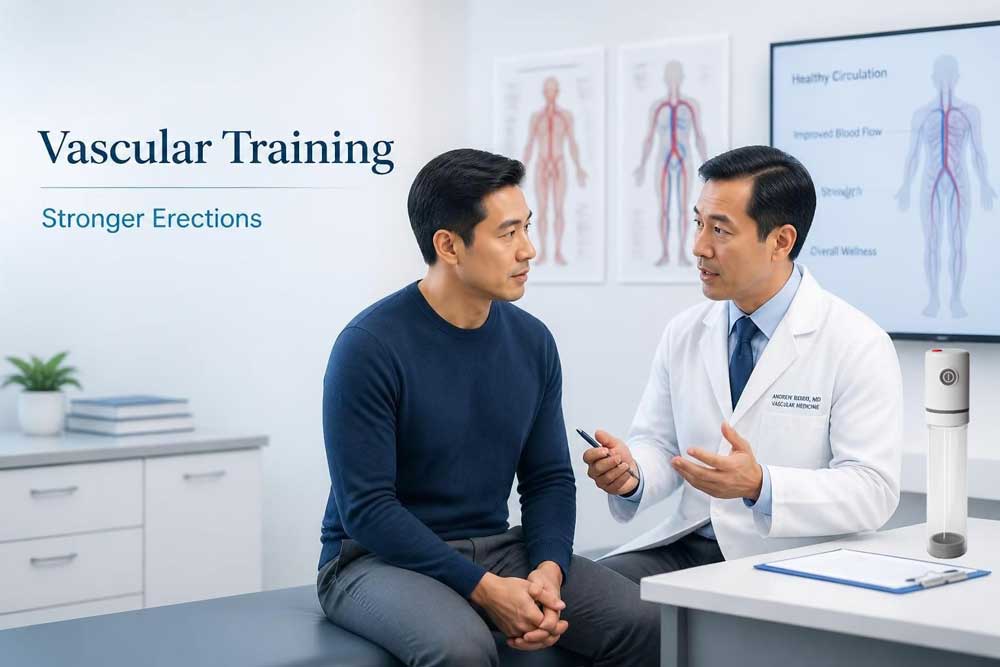
Vascular Training: How Vacuum Pumps “Train” Your Erections to Become Stronger
There is a concept in fitness that most people understand intuitively: if you want a muscle to grow stronger, you have to challenge it consistently over time. Your cardiovascular system works the same way. The heart gets more efficient, the blood vessels adapt, and circulation improves. What fewer people realize is that the same principle applies to erectile function, and vacuum pumps are one of the most effective tools for making it happen.
This is not pseudoscience. It is a well-documented area of men’s sexual medicine, and it has a name: vascular training for erectile health. If you have been dealing with weaker erections, slower arousal, or are recovering from surgery or illness, understanding how vacuum therapy works at the physiological level could change how you approach your sexual health.
What Does “Vascular Training” Actually Mean?
When doctors talk about vascular training in the context of erectile dysfunction, they are referring to a process of repeatedly stimulating blood flow into the penile tissue in order to maintain or restore its health over time.
Think of it this way. The erectile tissue in the penis, called the corpora cavernosa, is made up of smooth muscle and blood vessels that fill with blood during arousal. If those structures are not regularly engorged, the tissue can become fibrotic, stiff, and less responsive. This is not a theory. It is a documented process that happens most aggressively after prostate surgery, but it can also develop gradually in men with untreated erectile dysfunction of any cause.
Vascular training interrupts that process. By consistently drawing blood into the tissue, you are essentially keeping the vascular architecture of the penis functional, flexible, and well-oxygenated.
How a Vacuum Pump Creates That Training Effect
A vacuum pump works by creating a controlled negative pressure environment around the penis. When you place the cylinder over the shaft and activate the pump, air is removed from the chamber. The resulting pressure differential draws blood into the penile tissue rapidly and consistently.
What happens next is where the training effect begins. The smooth muscle within the corpus cavernosum stretches to accommodate the increased blood volume. The endothelial cells lining the blood vessels respond to that mechanical stimulus. Over repeated sessions, the tissue adapts. It becomes more responsive, more elastic, and better able to retain blood during natural arousal.
This is why urologists increasingly prescribe vacuum erection devices not just as a tool for achieving an erection in the moment, but as part of a structured penile rehabilitation program.
The goal is not just immediate function but restored function over the weeks, months, and years to come.
The Science Behind Repeated Engorgement
One of the key mechanisms behind vascular training is oxygen delivery. Erectile tissue is oxygen-sensitive. During a natural erection, the tissue becomes highly oxygenated. During the flaccid state, oxygenation is much lower. If a man is not experiencing spontaneous erections, especially at night when nocturnal erections typically maintain tissue health, the tissue can begin to deteriorate due to chronic low oxygen exposure.
Research published in the field of sexual medicine has shown that penile oxygenation is directly linked to smooth muscle preservation. When smooth muscle is lost and replaced by fibrotic tissue, erections become harder to achieve and maintain. Regular use of a vacuum pump restores the cycle of engorgement and oxygenation, which protects the smooth muscle and supports its recovery.
This is especially critical for men who have undergone radical prostatectomy. Post-surgical nerve disruption can temporarily eliminate spontaneous erections, which means the tissue is deprived of its natural oxygenation cycle. Many urologists now recommend starting vacuum therapy within weeks of surgery, before the tissue has a chance to deteriorate significantly.
Who Benefits Most from This Type of Vascular Training?
While vacuum therapy is beneficial for a wide range of men dealing with erectile difficulties, certain groups tend to see the most significant results from a structured, consistent approach.
Men recovering from prostate or penile surgery are at the top of that list. The disruption to nerve and vascular pathways during surgery can take months or years to heal, and penile rehabilitation using vacuum devices is now considered standard supportive care in many urology practices.
Men with vascular erectile dysfunction also benefit substantially. This is the most common form of ED, caused by reduced blood flow due to conditions like hypertension, diabetes, high cholesterol, or atherosclerosis. For these men, vacuum training helps maintain tissue health while they address the underlying medical conditions.
Even men without a clinical diagnosis who notice that their erections are not as firm or reliable as they once were can benefit from incorporating vacuum therapy into their routine. Changes in erectile quality often precede a formal diagnosis by years, and addressing them early can prevent more significant dysfunction down the road.
What a Proper Vascular Training Protocol Looks Like
Using a vacuum pump casually as needed is one thing. Using it as a systematic training tool is another. For the rehabilitative and vascular training effect to take hold, consistency matters enormously.
Most protocols used in clinical settings involve daily or near-daily sessions, particularly in the early stages of rehabilitation. Each session typically involves one or more cycles of engorgement, held for a controlled period before the pressure is released. The goal during rehabilitation sessions is not necessarily to achieve an erection firm enough for intercourse. It is to stimulate blood flow and tissue oxygenation consistently over time.
If you are using a vacuum pump primarily to support spontaneous erections or as an aid to intercourse, the approach may differ. The Androvacuum device from Andromedical is designed with this flexibility in mind, making it suitable for both rehabilitation-focused use and situational support.
Understanding the appropriate frequency and duration of use for your specific situation is important. Overuse can cause temporary bruising or discomfort, while too infrequent use will not produce a meaningful training effect. Speaking with a healthcare provider about a structured protocol is always advisable.
How Vacuum Therapy Compares to Other ED Treatments
This is a question that comes up often, and the honest answer is that vacuum therapy occupies a unique position in the treatment landscape because of what it actually does to the tissue itself.
Medications like PDE5 inhibitors work by enhancing the chemical signals that cause blood vessels to dilate. They are effective for many men, but they do not address the underlying vascular health of the penile tissue. When the medication wears off, you are back to the same baseline.
Vacuum therapy, used consistently over time, changes the baseline. It improves the actual vascular environment within the tissue, which is something pills cannot do. This does not mean one approach is universally better than the other. In fact, many clinicians use them together. But
it does mean that vacuum therapy has a rehabilitative dimension that medication alone lacks.
For men who cannot take PDE5 inhibitors due to other medications or heart conditions, vacuum therapy offers a completely drug-free alternative that is both safe and effective when used correctly.
Choosing the Right Device for Vascular Training
Not all vacuum pumps are created equal. There is a meaningful difference between the novelty devices sold in general consumer stores and medical-grade vacuum erection systems designed to deliver consistent, calibrated pressure.
A medical-grade device will have pressure control mechanisms that protect the tissue from excessive negative pressure, which is important both for safety and for the effectiveness of the training effect. Too much pressure does not produce a better result. It produces bruising, discomfort, and potentially counterproductive outcomes.
Andromedical’s vacuum devices are engineered with this balance in mind, combining clinical precision with user-friendly design. According to research from the Cleveland Clinic, vacuum erection devices are considered a safe and effective first-line option for erectile dysfunction management, particularly when medication is not suitable or not preferred.
The construction of the cylinder, the quality of the seal, and the precision of the pressure system all affect how well the device works and how safely it can be used over an extended period. If you are committing to a vascular training protocol, the quality of the tool you choose matters.
Combining Vacuum Therapy with Other Men’s Health Strategies
Vascular training through vacuum therapy does not exist in isolation. The most effective approaches to erectile rehabilitation treat the whole person, addressing lifestyle factors, underlying medical conditions, and psychological contributors alongside the physical training component.
Cardiovascular exercise, for example, directly supports erectile health by improving systemic blood flow and endothelial function. A diet that supports heart health supports penile health.
Managing blood pressure, blood sugar, and cholesterol reduces vascular damage that would otherwise work against your rehabilitation efforts.
Sleep quality matters more than most people realize. The nocturnal erections that naturally occur during REM sleep are part of the body’s built-in penile maintenance system. Improving sleep hygiene can restore some of that natural oxygenation cycle.
Stress and anxiety have a documented negative impact on erectile function, often through both psychological and vascular pathways. Addressing mental health as part of a comprehensive approach amplifies the physical benefits of vacuum training.
When all of these elements are combined with a consistent vacuum therapy protocol, the cumulative effect on erectile function can be significant and lasting.
What to Realistically Expect Over Time
This is where honest expectations matter. Vascular training is not a quick fix. It is a commitment to a process that builds results incrementally.
Most men who use vacuum therapy consistently for rehabilitation purposes begin to notice changes within four to six weeks. These changes might include improved spontaneous erection quality, greater firmness during assisted erections, or a faster arousal response. Over three to six months of consistent use, more substantial improvements in baseline erectile function are commonly reported.
The timeline varies depending on the severity of the underlying issue, the consistency of use, and how well other health factors are being managed. Men who are recovering from surgery and addressing other vascular risk factors simultaneously often see the most meaningful long-term improvements.
Patience is part of the protocol. The tissue did not lose its responsiveness overnight, and it will not fully recover overnight. But the research supports the conclusion that consistent vascular training does produce real, measurable changes in erectile tissue health.
Conclusion: Your Erections Can Improve With the Right Approach
The idea that erectile function is something that simply declines and cannot be meaningfully restored is outdated. The science of penile rehabilitation, vascular training, and tissue health tells a more optimistic story, but only if you take action.
Vacuum pump therapy is one of the most well-supported, drug-free options available to men at any stage of erectile health. Whether you are recovering from surgery, managing a vascular condition, or simply looking to maintain and improve your baseline function, a structured vacuum training protocol has something real to offer.
Andromedical exists to help men navigate these decisions with medically sound guidance and tools that are built for the job. If you are ready to take a more active role in your erectile health, exploring a clinical-grade vacuum device is a logical and evidence-supported place to start. Your vascular system responds to training. The question is whether you are ready to give it the consistency it needs to improve.