
What Every Man Should Eat for Long-Term Health
Most men think about their health in terms of workouts, sleep, and maybe stress levels. Diet often gets treated as an afterthought – something to clean up “eventually.” But what you eat every single day has a more direct impact on your hormones, energy, sexual health, and long-term vitality than almost any other factor you can control.
This is not about chasing a perfect body. It is about building a foundation that keeps your body functioning the way it should, especially as you age.
Why Diet Matters More for Men Than Most Realize
Men face a distinct set of biological challenges as they get older. Testosterone levels begin to decline gradually after the age of 30. Cardiovascular risk increases. Blood flow and circulation become less efficient. Sexual function can start to shift in ways that feel confusing or even alarming.
What most men do not realize is that all of these changes are significantly influenced by diet.
The foods you eat affect inflammation, hormone production, blood vessel health, and even your mental resilience. A poor diet does not just make you feel sluggish – it quietly undermines the systems that matter most.
The Core Principles of a Healthy Male Diet
Prioritize Protein, But Choose It Wisely
Protein is the building block of muscle, hormone production, and cellular repair. Men generally need more protein than the standard recommended daily intake suggests, particularly if they are active or over 40.
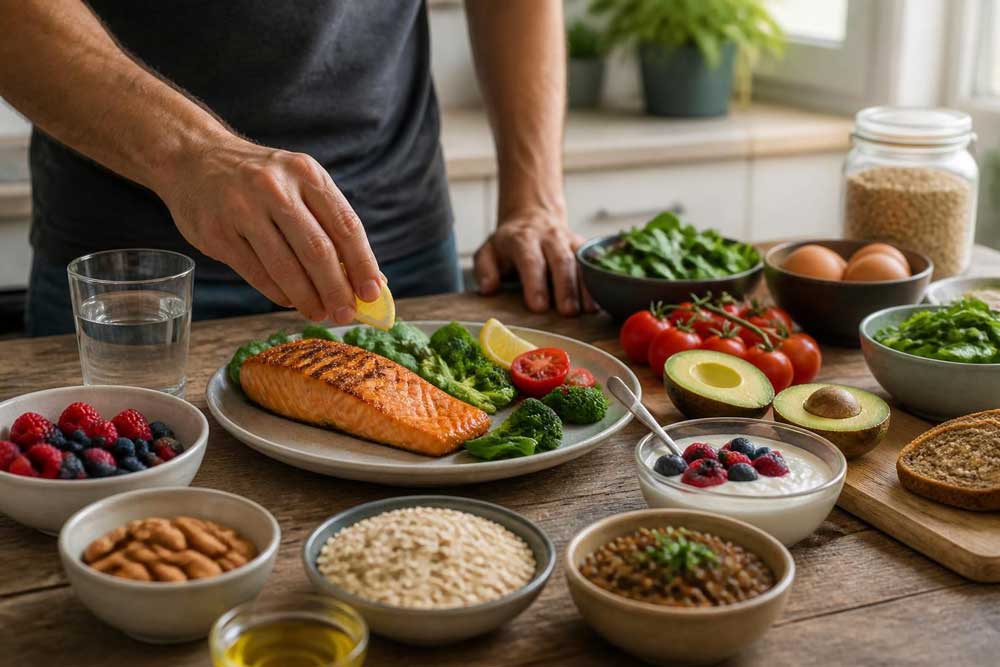
Lean meats like chicken and turkey, fatty fish like salmon and sardines, eggs, legumes, and Greek yogurt are all solid sources. Fatty fish deserve special mention because they also deliver omega-3 fatty acids, which actively support cardiovascular health and reduce systemic inflammation – two areas that directly affect sexual and hormonal health.
Red meat can be included in moderation, but processed meats – sausage, bacon, deli cuts loaded with sodium and preservatives – are worth limiting. The evidence linking high consumption of ultra-processed meats to cardiovascular disease and hormonal disruption is consistent and well-established.
Do Not Fear Healthy Fats
For decades, fat was treated as the enemy. That thinking has been largely corrected by nutritional science, but the confusion it created still lingers. Healthy fats – particularly monounsaturated and polyunsaturated fats – are essential for testosterone production and brain function.
Avocados, olive oil, nuts, and seeds should feature regularly in a male diet. These foods support the endocrine system, help regulate cholesterol, and provide sustained energy without the blood sugar spikes that come from refined carbohydrates.
Trans fats, on the other hand, remain genuinely harmful. Found in partially hydrogenated oils and many packaged snack foods, they raise LDL cholesterol, damage blood vessel walls, and have been directly linked to reduced testosterone levels in several studies published through the National Institutes of Health.
Carbohydrates: Quality Over Quantity
Carbohydrates are not the problem. The type and quality of carbohydrates is. Refined sugars and white flour products spike blood sugar rapidly, contribute to insulin resistance, and promote fat storage – particularly around the abdomen. That abdominal fat is not benign. It actively converts testosterone into estrogen, which can contribute to hormonal imbalance over time.
Whole grains, sweet potatoes, oats, fruits, and vegetables provide fiber, micronutrients, and steady energy. They support gut health, which in turn affects everything from mood to immune function. Men who make this shift often notice improvements in energy and focus within weeks.
Key Nutrients Every Man Should Pay Attention To
Zinc and Testosterone
Zinc is one of the most critical minerals for male health, and it is commonly under-consumed. It plays a direct role in testosterone synthesis, sperm production, and immune function. Oysters are famously rich in zinc, but you can also get meaningful amounts from red meat, pumpkin seeds, lentils, and chickpeas.
Deficiency in zinc has been associated with lower testosterone levels and reduced fertility. If you are not eating a varied diet, this is one nutrient worth paying close attention to.
Magnesium and Sleep Quality
Magnesium supports muscle function, nerve health, and – critically – sleep quality. Poor sleep is one of the fastest ways to tank testosterone levels and impair cognitive function. Many men are chronically low in magnesium without realizing it.
Leafy greens like spinach and kale, dark chocolate, almonds, and black beans are all good sources. Magnesium also helps regulate cortisol, the stress hormone that, when chronically elevated, suppresses testosterone and disrupts sexual function.
Vitamin D: The Overlooked Hormone Regulator
Vitamin D functions more like a hormone than a vitamin. It regulates testosterone production, supports immune function, and influences mood. Yet deficiency is extraordinarily common, especially in men who spend most of their time indoors.
Fatty fish, egg yolks, and fortified dairy products contain some vitamin D, but sunlight remains the most efficient source. For men living in northern climates or working desk jobs, a supplement may be worth discussing with a doctor.
What to Cut Back On
A healthy male diet is as much about subtraction as addition. Alcohol, when consumed heavily, suppresses testosterone and impairs liver function – which in turn affects how hormones are metabolized. Moderate intake may be fine for most men, but chronic heavy drinking has measurable negative effects on sexual and hormonal health.
Highly processed foods loaded with refined sugars, seed oils, and artificial additives promote inflammation and disrupt metabolic health. These are not just empty calories – they are actively disruptive to the systems that keep men healthy and functioning well.
Diet, Weight, and Sexual Health
There is a straightforward but often overlooked connection between body composition and sexual health. Excess abdominal fat does not just affect how you feel in your clothes – it affects hormone levels, blood flow, and even physical anatomy. Research continues to highlight the relationship between weight loss and penis size, showing how shedding fat in the pubic region can reveal length that was previously hidden.
Diet is the single most powerful lever for managing body composition. Exercise matters, but you cannot out-train a consistently poor diet.
Putting It All Together
A healthy male diet does not need to be complicated or obsessive. It needs to be consistent.
Focus on whole foods, adequate protein, healthy fats, and quality carbohydrates. Pay attention to micronutrients like zinc, magnesium, and vitamin D. Cut back on processed foods and alcohol without treating every meal as a test of willpower.
Small, sustainable changes made over months create the foundation for a healthier future – one where your hormones, cardiovascular system, energy, and sexual health all benefit.
Take the Next Step Toward Better Male Health
Nutrition is one part of the picture. If you are also exploring how specific treatments and devices can support your sexual health goals, understanding testosterone supplements’ effectiveness is a smart place to continue your research. The more informed you are, the better equipped you will be to make decisions that actually work for your body.