
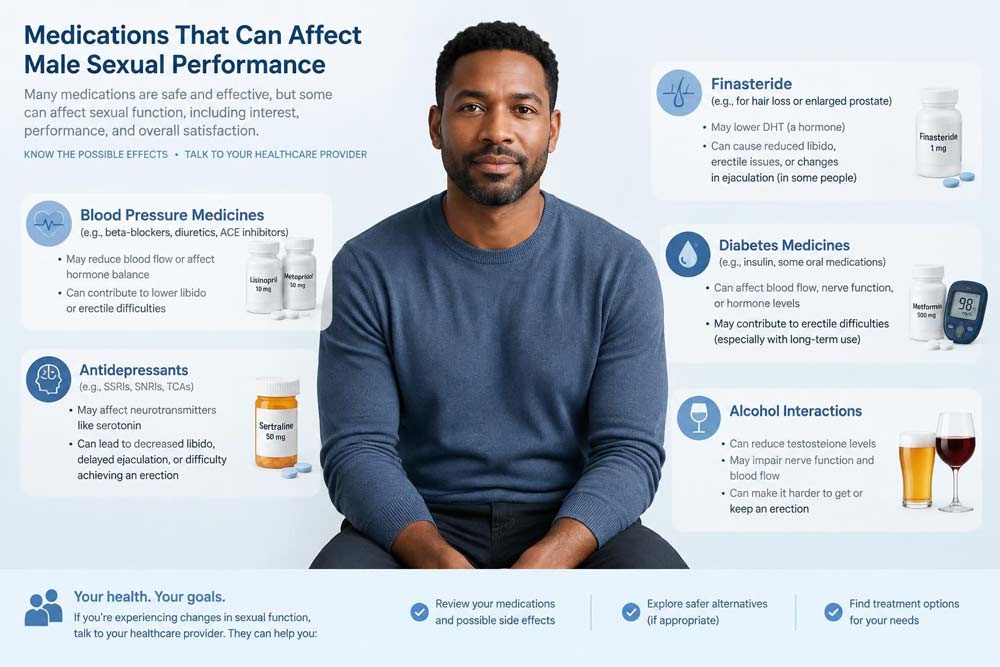
Medications That Affect Male Sexual Performance
If you’ve noticed changes in your sex drive, ability to get an erection, or how you feel during intimacy, your medication cabinet might be worth a second look. It’s one of the most overlooked causes of sexual difficulty in men, and it’s more common than most people realize.
This isn’t about fear-mongering. Most medications that affect sexual performance do so as a side effect, not by design. But understanding what’s happening in your body puts you in a much better position to have an honest conversation with your doctor and to find solutions that actually work.
Why Medications Can Interfere With Sexual Function
Sexual performance in men depends on a surprisingly delicate chain of events. Arousal begins in the brain, travels through the nervous system, involves hormones like testosterone, and requires healthy blood flow to the genitals. When a medication disrupts any part of that chain, something can go wrong.
Some drugs lower testosterone. Others block nerve signals. Some restrict blood vessels, which directly limits erections. A few affect mood and motivation so significantly that desire fades altogether. The effect depends on the drug, the dose, and the individual.
Common Medication Categories That Impact Male Sexual Health
Antidepressants and Antianxiety Drugs
This is one of the most well-documented categories. Selective serotonin reuptake inhibitors, commonly known as SSRIs, are widely prescribed for depression and anxiety. They work by increasing serotonin in the brain, but serotonin can suppress dopamine activity, which plays a key role in sexual desire and arousal.
Men taking SSRIs frequently report reduced libido, difficulty achieving orgasm, or delayed ejaculation. Some experience erectile difficulties as well. This doesn’t mean antidepressants should be avoided, but it does mean the side effects are worth discussing openly with a prescribing physician.
Benzodiazepines, used for anxiety and sleep, can have a sedating effect that dampens sexual interest and responsiveness.
Blood Pressure Medications
Hypertension is common in men over 40, and so is the use of antihypertensive medications. Beta-blockers, in particular, are associated with erectile dysfunction. They work by slowing the heart and reducing blood pressure, but in doing so, they can also reduce blood flow to the penis.
Diuretics, another class of blood pressure drugs, may lower zinc levels in the body, which can contribute to lower testosterone production over time. Alpha-blockers, on the other hand, tend to have a more neutral or even slightly positive effect on erectile function, which is why some doctors prefer them for men who are already experiencing sexual health concerns.
Opioid Pain Medications
Long-term opioid use has a well-established link to hypogonadism, a condition where the body produces insufficient testosterone. This happens because opioids interfere with the hypothalamic-pituitary-gonadal axis, the hormonal communication pathway that regulates testosterone production.
Men on long-term opioid therapy often report low libido, erectile dysfunction, fatigue, and reduced muscle mass. These aren’t minor inconveniences. They can meaningfully reduce quality of life, and they’re frequently underreported because patients may not connect their symptoms to their pain medication.
Hormonal Therapies and Prostate Treatments
Men undergoing treatment for prostate cancer often receive androgen deprivation therapy, which intentionally lowers testosterone to slow cancer growth. The sexual side effects are significant and expected: reduced libido, erectile dysfunction, and sometimes changes in body composition.
5-alpha reductase inhibitors, used to treat benign prostatic hyperplasia (BPH) or male pattern baldness, also carry sexual side effects. Finasteride and dutasteride fall into this category. They work by blocking the conversion of testosterone to dihydrotestosterone (DHT), but some men experience reduced libido and ejaculatory changes as a result.
Antihistamines and Cold Medications
This one surprises people. Over-the-counter antihistamines like diphenhydramine, commonly found in allergy and sleep aids, can reduce sexual arousal and interfere with the nervous system signals needed for erection. Decongestants like pseudoephedrine can restrict blood vessels, including those involved in erectile function.
These effects are generally short-term, but if a man is already dealing with other contributing factors, even temporary medication-related interference can add up.
Antipsychotics
Antipsychotic medications can raise levels of a hormone called prolactin. Elevated prolactin suppresses testosterone and can cause reduced libido, erectile dysfunction, and ejaculatory problems. This is particularly relevant for men on older antipsychotic medications, though some newer atypical antipsychotics carry lower risk in this area.
What You Can Do If You Suspect Medication Is the Cause
The first and most important step is to talk to your doctor before making any changes to your medication. Stopping a prescribed drug without medical guidance can cause serious problems, especially for antidepressants or blood pressure medications.
What your doctor can do is review your full medication list, consider switching to an alternative with a better sexual side-effect profile, or adjust your dosage. Sometimes a small change makes a meaningful difference.
It’s also worth distinguishing between medication-related causes and psychological ones. The impact of stress and performance anxiety on erectile function is real and often intertwined with physical causes, making it harder to identify the root issue without professional guidance.
Non-Invasive Options That Can Help
For men dealing with ongoing erectile difficulties, whether related to medication or other causes, there are clinically validated, non-invasive options worth knowing about. Vacuum penis pumps, for example, work by drawing blood into the penis to support erection and have been used therapeutically for decades. According to research published through the National Institutes of Health, vacuum erection devices can be effective for men with a range of erectile dysfunction causes, including those related to medication side effects.
Andromedical’s Androvacuum is one such device, designed with both safety and ease of use in mind. It can be a practical addition to a broader treatment plan, particularly for men whose medication cannot be changed or whose sexual function needs support during a period of treatment.
Penile traction devices, like the Andropenis, are another option for men dealing with changes in erectile quality or penile health following surgery or hormonal changes. These devices work gradually and non-invasively, offering a medically grounded alternative or complement to other approaches.
Frequently Asked Questions
Can I stop taking my medication to improve sexual performance?
You should never stop a prescribed medication without speaking to your doctor first. There are often safer alternatives or adjustments that can address sexual side effects without compromising your overall health.
How long does it take for sexual side effects to appear after starting a new medication?
It varies. Some men notice changes within days, others within weeks. If you notice changes after starting a new drug, document them and raise the issue at your next appointment.
Are sexual side effects from medication permanent?
In most cases, they are not. Once the medication is stopped or changed, sexual function often returns to baseline. However, this depends on the drug, the duration of use, and individual health factors.
Taking Back Control of Your Sexual Health
Medication-related sexual dysfunction is genuinely underdiagnosed and underreported, partly because men are reluctant to raise it and partly because physicians don’t always ask. But it’s a real and treatable issue.
Understanding what your medications may be doing is a meaningful first step. From there, combining medical guidance with the right supportive tools can make a significant difference. If you’re looking for where to begin, exploring available erectile dysfunction treatments can help you understand which approaches are clinically grounded and suited to your specific situation.
You don’t have to accept sexual difficulty as the unavoidable cost of managing another health condition. There are options, and getting informed is how you start finding them.