
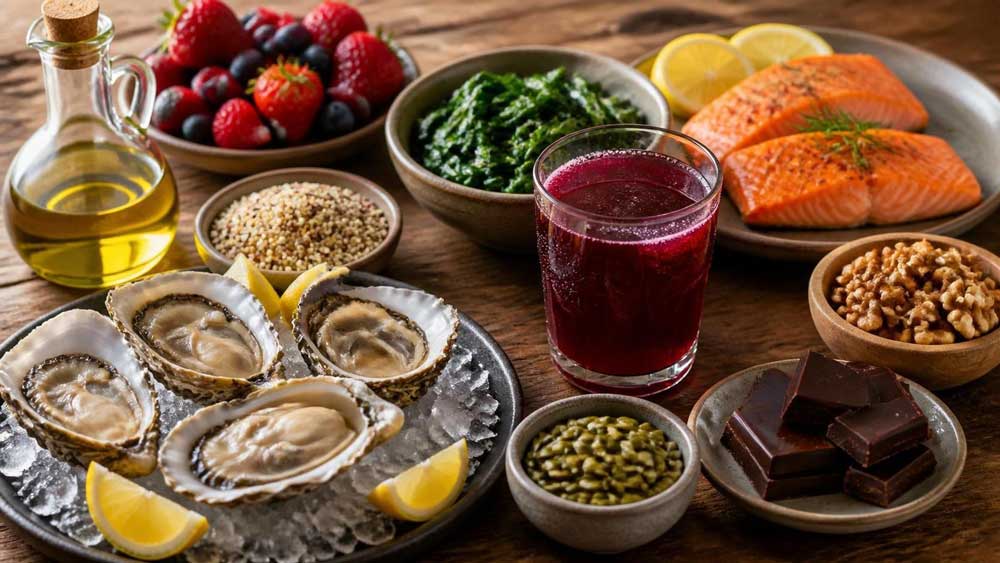
Nutritional Guide for the Penis
Most conversations about penis health jump straight to devices, exercises, or medical procedures. Nutrition rarely enters the picture. But what you eat has a direct and measurable impact on penile function, circulation, hormone levels, and even long-term tissue health.
This guide is not about miracle foods or exaggerated claims. It is about understanding the biological connection between diet and penile health so you can make smarter choices that actually support your goals.
Why Nutrition Matters for Penile Health
The penis is, at its core, a vascular organ. An erection happens because blood flows in and stays in. That process depends entirely on the health of your blood vessels, the flexibility of penile tissue, and the hormonal signals that trigger the whole sequence.
When your diet is poor, those systems suffer quietly. Cholesterol builds up in arterial walls.
Testosterone drops. Nitric oxide production slows down. None of these things happen overnight, but over months and years, the damage shows up in ways that are hard to ignore.
Good nutrition works in the opposite direction. It keeps blood vessels flexible, supports healthy testosterone levels, reduces inflammation, and gives the body the raw materials it needs to maintain and repair penile tissue.
The Role of Blood Flow in Penile Function
Before diving into specific nutrients, it is worth understanding one concept: nitric oxide. This molecule is produced in the lining of your blood vessels and is responsible for telling those vessels to relax and expand. More nitric oxide means better blood flow. Better blood flow means stronger, more reliable erections.
Your diet has a direct effect on how much nitric oxide your body produces. Certain foods and nutrients stimulate its production. Others, particularly those high in saturated fat, sugar, and processed ingredients, suppress it.
This is not theoretical. Studies consistently show that men with diets high in processed food have significantly higher rates of erectile dysfunction than men who eat predominantly whole, plant-rich foods. The mechanism is largely vascular.
Key Nutrients That Support Penis Health
Nitrates and L-Arginine
Nitrates, found naturally in vegetables like beets, spinach, arugula, and celery, are converted by the body into nitric oxide. They are one of the most direct nutritional levers you can pull to improve blood flow throughout the body, including penile circulation.
L-arginine is an amino acid that serves as a direct precursor to nitric oxide. It is found in foods like turkey, chicken, pumpkin seeds, soybeans, and lentils. Some research supports its role in improving erectile quality, particularly in men with mild to moderate dysfunction related to poor circulation.
Combining high-nitrate vegetables with L-arginine-rich proteins is a practical and effective dietary strategy. It does not require supplements, though some men do choose to supplement L-arginine separately.
Zinc and Testosterone
Zinc is perhaps the most important mineral for male sexual health. It plays a central role in testosterone production, and zinc deficiency is one of the most common and underdiagnosed causes of low testosterone in men.
Foods rich in zinc include oysters (the most concentrated source by far), red meat, shellfish, pumpkin seeds, hemp seeds, and legumes. Men who do not eat much animal protein are at higher risk of zinc deficiency and should pay close attention to their intake.
Even a moderate zinc deficiency can cause a measurable drop in testosterone levels.
Correcting that deficiency through diet often has a noticeable effect on libido, energy, and erectile function.
Vitamin D
Vitamin D behaves more like a hormone than a vitamin in the body, and it plays a direct role in testosterone synthesis. Research published in peer-reviewed journals has consistently found a correlation between low vitamin D levels and low testosterone in men.
The best dietary sources of vitamin D include fatty fish like salmon, mackerel, and sardines, as well as egg yolks, beef liver, and fortified dairy products. Sunlight exposure also triggers vitamin D production in the skin, but for many men living in northern climates or spending most of their time indoors, dietary intake matters significantly.
Getting your vitamin D levels checked through a simple blood test is a reasonable step if you are experiencing symptoms of low testosterone or declining sexual function.
Omega-3 Fatty Acids
Chronic inflammation is one of the most damaging things for vascular health, and vascular health is the foundation of penile function. Omega-3 fatty acids, found in fatty fish, flaxseeds, chia seeds, and walnuts, are among the most potent anti-inflammatory nutrients available through diet.
Omega-3s also support the production of prostaglandins, which are compounds involved in regulating smooth muscle function in penile tissue. There is even some emerging research suggesting that omega-3 supplementation may support improvements in penile tissue health over time.
Aiming for two to three servings of fatty fish per week is a straightforward way to meet omega-3 needs through food. For men who do not eat fish, algae-based omega-3 supplements provide a plant-based alternative.
Flavonoids and Antioxidants
Oxidative stress damages blood vessel walls and impairs nitric oxide production. Antioxidants counteract this damage. Flavonoids, a class of plant-based antioxidants found in berries, dark chocolate, citrus fruits, red wine, and green tea, have been specifically linked to improved erectile function in population-level studies.
A large study published in the American Journal of Clinical Nutrition found that men who consumed the most flavonoids had a significantly lower risk of developing erectile dysfunction than those who consumed the least. The effect was comparable to walking briskly for several hours per week.
Including a variety of colorful fruits and vegetables in your daily diet is the most efficient way to cover your antioxidant needs. Berries, in particular, are among the most concentrated sources of flavonoids and can easily be incorporated into breakfast or snacks.
Foods That Harm Penile Health
Just as important as knowing what to eat is knowing what to limit. Several common dietary patterns actively damage the systems that support penile function.
- Processed and ultra-processed foods are high in sodium, refined carbohydrates, and industrial fats. They promote arterial stiffness, raise blood pressure, and reduce nitric oxide availability. Men who eat heavily processed diets are at substantially higher risk for erectile dysfunction.
- Excessive sugar and refined carbohydrates contribute to insulin resistance and metabolic syndrome, both of which are strongly associated with erectile dysfunction. High blood sugar damages small blood vessels over time, including those in the penis.
- Alcohol in large quantities lowers testosterone, impairs nerve function, and reduces nitric oxide production. Moderate consumption appears to have minimal impact for most men, but chronic heavy drinking is a significant risk factor for sexual dysfunction.
- Soy in very high quantities has been studied for its phytoestrogen content. While normal consumption appears safe for most men, extremely high intake, such as multiple servings of soy protein isolate per day, may potentially influence hormone balance in some individuals. The evidence is not conclusive, but it is worth being aware of if soy makes up a large part of your diet.
Nutrition as Part of a Broader Approach to Penile Health
Diet is powerful, but it does not work in isolation. Men who are serious about improving penile health tend to get the best results when they address multiple factors at once.
Exercise is one of the most important complementary strategies. Vascular exercises for penis girth work by improving local circulation and supporting tissue expansion over time. Combined with a diet that promotes vascular health, the effects are meaningfully amplified.
Sleep, stress management, and avoiding tobacco are equally relevant. Cortisol, the stress hormone, directly suppresses testosterone. Poor sleep disrupts the hormonal cycles that regulate testosterone production. Smoking causes endothelial damage that impairs nitric oxide function. No diet can fully compensate for chronic stress, sleep deprivation, or nicotine exposure.
For men dealing with more specific conditions, such as Peyronie’s disease, post-surgical recovery, or significant erectile dysfunction, nutrition is best understood as a supportive foundation rather than a standalone treatment. In those cases, medical-grade interventions are often necessary, and nutrition reinforces their effectiveness.
How Andromedical Approaches Penile Health
Andromedical takes a whole-person view of men’s sexual health. Their devices, which include penile traction extenders like the Andropenis, the Andropeyronie for curvature correction, the Androsurgery for post-surgical support, and the Androvacuum pump for erectile dysfunction,https://www.andromedical.com/andro-products/andropeyronie/ are clinically tested and medically certified.
What makes Andromedical’s approach particularly practical is how their devices can be used alongside lifestyle changes. When a man optimizes his diet, improves his circulation through exercise, and uses a medically validated device consistently, the cumulative effect is far greater than any single intervention.
Their support team works with each customer individually to identify the most appropriate solution based on their specific health situation, goals, and background. That kind of personalized guidance, combined with science-backed products, is exactly what separates a medical-grade approach from generic consumer products.
Frequently Asked Questions
Can diet actually improve erectile function?
Yes. Multiple studies have demonstrated that dietary patterns rich in flavonoids, nitrates, omega-3s, and zinc are associated with significantly better erectile function. The effect is most pronounced in men whose dysfunction has a vascular or hormonal component, which is the majority of cases.
How long does it take for dietary changes to affect penile health?
It depends on the individual and the severity of any underlying issues. Some men notice improved erections within a few weeks of dietary improvements, particularly when the changes address a specific deficiency like zinc or vitamin D. More significant vascular improvements typically take three to six months of consistent dietary change.
Do I need supplements, or can I get everything from food?
For most men, whole food sources are sufficient. However, certain nutrients, particularly vitamin D and omega-3s, can be difficult to get in adequate quantities through diet alone depending on lifestyle, location, and food preferences. Targeted supplementation in those specific areas can be useful.
Is there a connection between diet and penis size?
Not directly in terms of anatomical structure. However, poor circulation caused by a poor diet can reduce the quality and firmness of erections, which affects perceived and functional size. Improved vascular health through diet often results in firmer, more complete erections.
Conclusion
Penile health is not separate from general health. The same dietary patterns that protect your heart, support your hormones, and reduce inflammation are the ones that support healthy sexual function. That connection is well-established and underappreciated.
Start with the basics: more whole vegetables and fruits, quality protein sources rich in zinc and L-arginine, fatty fish for omega-3s and vitamin D, and significantly less processed food, sugar, and alcohol. These are not dramatic changes, but their cumulative effect on vascular health and testosterone can be substantial.
If you are dealing with a specific condition or want to go further, explore what Andromedical offers. Their medically validated devices, expert support, and science-backed approach make them a genuinely useful resource for men who want real solutions, not just general advice. Take the first step toward understanding your options and take control of your health with the same seriousness you would give any other aspect of your physical well-being.