
5 Things Nobody Tells You About Vasectomy Recovery
So you’ve decided to get a vasectomy – or you’re seriously considering one. You’ve done some research, talked to your doctor, and you think you know what to expect. A quick procedure, a few days on the couch, some ice packs, and you’re back to normal. Right?
Not exactly.
Most men go into vasectomy recovery with a pretty optimistic picture. While vasectomies are among the safest and most routine outpatient procedures available, the recovery process has a few surprises that doctors don’t always mention.
Whether it’s because appointment time is limited, the information feels too minor to bring up, or it’s simply assumed you’ll figure it out on your own, a lot of guys end up Googling things they wish someone had told them upfront.
That’s what this article is for. No fluff, no sugarcoating. Just the honest, practical things nobody tells you about recovering from a vasectomy – and what you can actually do about them.
The First Week Feels Fine – Then It Doesn’t
Here’s something that catches men off guard: the first couple of days after a vasectomy often feel surprisingly manageable. The local anesthetic is still doing some of the heavy lifting, you’re resting, and you might think you’re in the clear.
Then, on day three or four, it hits.
Swelling tends to peak around this time, and discomfort that felt minor on day one can suddenly feel much more significant. This delayed spike in soreness is completely normal, but because nobody warns you about it, many men assume something has gone wrong. It hasn’t – your body is simply doing what it does when healing tissue that’s been surgically altered.
The lesson here is to plan your recovery for the full week, not just the first 48 hours. Don’t schedule physical activities, don’t assume you’ll be productive working from home, and don’t plan to drive yourself on day four. Give yourself real, uninterrupted downtime.
Scrotal Support Is Not Optional – It’s Critical
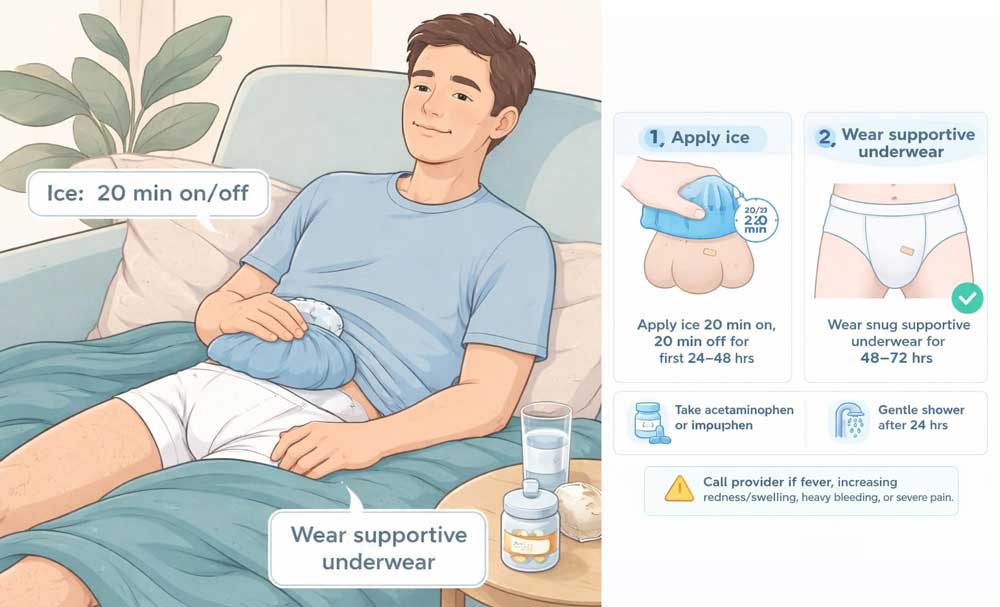
Your doctor will probably hand you a jockstrap or supportive underwear on your way out and tell you to wear it. What they might not emphasize strongly enough is how non-negotiable this is.
Scrotal support during vasectomy recovery does more than just reduce discomfort. It keeps swelling in check, prevents the kind of movement that can irritate healing tissue, and significantly reduces the risk of a condition called a sperm granuloma – a small, painful lump that can develop when sperm leaks into surrounding tissue. It’s not dangerous, but it is uncomfortable and takes weeks to resolve.
Wear the support garment during the day, and consider light, fitted underwear at night. This isn’t the time to prioritize comfort in the way you normally would. Functional support is the priority.
Sexual Function Can Be Temporarily Affected – And That’s Worth Talking About
Most men are told to avoid sex for about a week after a vasectomy. What they’re not always told is that even after resuming sexual activity, things might feel a little different for a while.
Some men notice mild discomfort during ejaculation in the first few weeks. Others experience a brief dip in confidence or feel psychologically disconnected from their usual sexual function.
Both are more common than you’d think, and both are generally temporary.
There’s also the question of erectile function. While a vasectomy doesn’t physically affect the nerves or blood vessels responsible for erections, anxiety, pain, and general post-procedure stress can have a short-term impact. If you notice that your erections feel less reliable in the weeks following the procedure, don’t panic – but don’t ignore it either.
If you’re experiencing ongoing concerns about erectile function after any urological procedure, it’s worth exploring resources around the latest erectile dysfunction treatment options that are clinically supported and non-invasive. Understanding what’s available can take a lot of pressure off, even if you ultimately don’t need any intervention.
You’re Not Sterile Immediately – And This Trips Men Up More Often Than You’d Think
This one is genuinely important, and it’s the piece of information that causes the most preventable problems after a vasectomy.
A vasectomy does not make you sterile the moment the procedure is over. The vas deferens (the tubes that carry sperm from the testes) are cut or sealed, but there are still sperm present downstream – in the seminal vesicles and along the reproductive tract – that haven’t cleared out yet. Depending on how sexually active you are, it can take anywhere from 8 to 20 ejaculations to clear those remaining sperm.
Most urologists recommend a follow-up semen analysis at around the 8 to 12-week mark to confirm that sperm count has reached zero. Until you have that confirmation in hand, you are not protected. Using backup contraception during this window isn’t being overly cautious – it’s the responsible approach.
According to the American Urological Association, vasectomy failure in the immediate post-operative period is almost always the result of unprotected sex before clearance is confirmed. Don’t be a statistic.
Penile Health Can Be Affected During Recovery – Here’s What to Watch For
This is the part that almost never comes up in standard pre-procedure conversations, probably because it feels tangential. But for men who care about their long-term sexual health – and who doesn’t – it’s worth understanding.
After a vasectomy, there is a period of enforced sexual rest, reduced physical activity, and sometimes significant swelling in the scrotal and penile region. For most men, this passes without lasting effects. But for some, particularly those who already have concerns about erectile quality, penile curvature, or tissue health, a period of prolonged inactivity and vascular disruption can be a contributing factor in worsening existing conditions.
Peyronie’s disease, for example, is caused by scar tissue forming inside the penis – and while a vasectomy doesn’t directly cause Peyronie’s, the combination of physical stress, reduced circulation, and lower sexual frequency during recovery can aggravate early or subclinical cases. If you notice any new curvature, lumps along the penile shaft, or pain during erections after your procedure, don’t dismiss it.
Penile traction therapy has been studied and used clinically for post-surgical recovery support in men who need to maintain penile length, improve tissue health, or address mild curvature concerns. If you’re recovering from any procedure that has affected your pelvic or genital region, a penile traction device for post-surgical recovery may be worth exploring as part of a broader recovery plan.
This isn’t alarmist information – it’s just a conversation that most men benefit from having with a qualified provider.
What Good Vasectomy Recovery Actually Looks Like
Now that you know what to expect, here’s a realistic picture of a well-managed recovery.
- Days 1-2: Rest completely. Apply ice packs for 20 minutes on, 20 minutes off. Wear your support garment. Take any prescribed pain relief as directed. Keep your lower body elevated when lying down.
- Days 3-5: Expect the soreness to peak. Continue resting. Light walking around the house is fine, but nothing more strenuous. Stay hydrated, and don’t be a hero about returning to work.
- Days 6-14: Gradual return to light activity. Avoid heavy lifting, vigorous exercise, or anything that causes bouncing or jarring movement. Resume sexual activity only after your doctor clears you – usually around the one-week mark.
- Weeks 3-12: Continue using backup contraception until your semen analysis confirms zero sperm count. If you notice any persistent discomfort, swelling that won’t go down, or changes to sexual function, follow up with your doctor.
When to Call Your Doctor
Recovery rarely goes sideways, but it does happen. Get in touch with your provider if you experience any of the following:
- Fever above 101°F (38.3°C), which can indicate infection
- Increasing, not decreasing, pain after the first few days
- Significant swelling, redness, or warmth around the incision site
- Discharge or bleeding from the incision
- A hard lump developing in the scrotum (possible sperm granuloma or hematoma)
- Any changes to urinary function
These are not signs to wait out. A quick call or visit can catch complications early and prevent a manageable problem from becoming a serious one.
Recovery and Long-Term Sexual Health – Thinking Ahead
A vasectomy is a permanent contraceptive decision, but it shouldn’t feel like the end of your relationship with your own sexual health. Most men recover fully, resume an active and satisfying sex life, and report high levels of satisfaction with the procedure in the long run.
But recovery is also a useful moment to take stock. If there are concerns you’ve been putting off – questions about erectile function, penile curvature, changes in size or sensitivity – this is a natural time to start addressing them rather than letting them linger.
At Andromedical, we work with men who are navigating exactly these kinds of questions, often after procedures or life events that brought underlying concerns to the surface. Our devices are clinically tested, medically certified, and designed for men who want real results without surgical intervention. Whether your concern is post-surgical recovery, erectile quality, or penile curvature, there are science-backed options worth knowing about.
Final Thoughts
Vasectomy recovery is genuinely manageable for most men – but it goes smoother when you’re prepared for what actually happens rather than the sanitized version. Swelling peaks later than you expect. Sterility isn’t immediate. Sexual function can fluctuate in the short term. Penile health during recovery deserves more attention than it usually gets.
If you’re heading into a procedure, or if you’re already in recovery and have questions that feel unanswered, don’t just wait it out. Talk to your doctor, do your research, and if your concerns extend into sexual function and penile health, explore what clinically supported options are available.
You’ve already made a responsible decision. Now make sure your recovery reflects that same level of care.