
Does Masturbation Affect Testosterone?
It’s one of those questions most men wonder about but rarely ask out loud. Does masturbation affect testosterone levels? Will it hurt your gains at the gym, drain your energy, or mess with your hormones? There’s a lot of noise on the internet about this topic, and not all of it is grounded in reality.
Let’s cut through the confusion and look at what the science actually says.
What Testosterone Does in the Male Body
Before diving into the masturbation question, it helps to understand what testosterone actually does. Testosterone is the primary male sex hormone. It plays a role in muscle mass, bone density, libido, mood, energy levels, and sperm production. It’s also deeply connected to how men feel about themselves physically and mentally.
Testosterone levels naturally peak in early adulthood and begin a slow, steady decline after age 30. Factors like stress, sleep, diet, and overall health all influence where your levels land at any given time.
What Actually Happens to Testosterone When You Masturbate
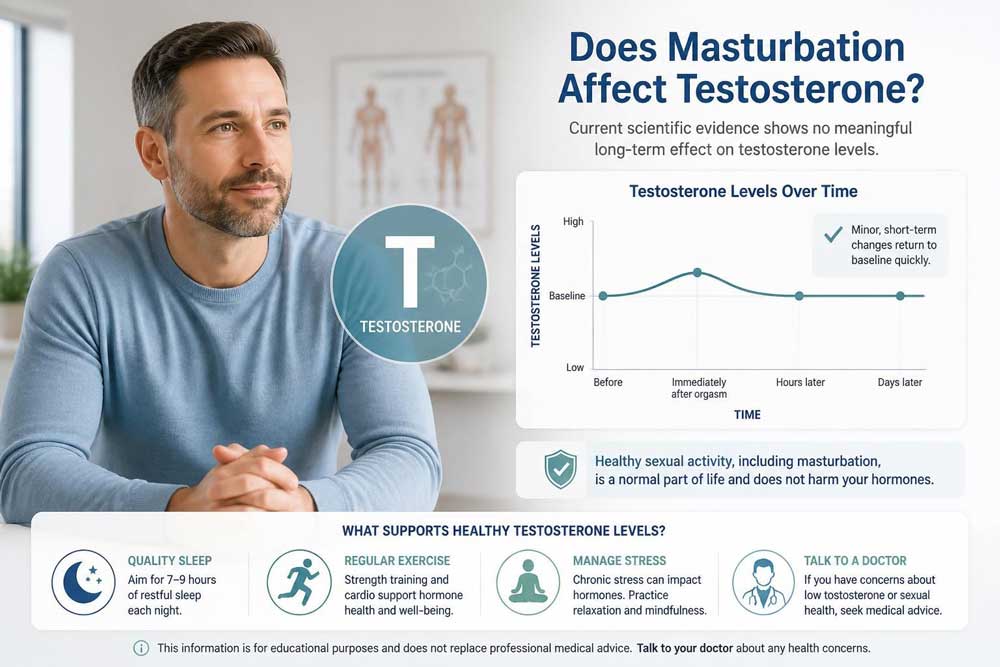
Here’s the honest answer: masturbation causes a short-term, temporary fluctuation in testosterone, not a lasting change.
During sexual arousal and orgasm, your body experiences a brief hormonal shift. Some studies have shown a small spike in testosterone right before orgasm, followed by a return to baseline levels shortly after. This is a normal physiological response, not something that depletes your hormonal reserves.
Think of it this way: your testosterone isn’t a fuel tank that empties every time you have an orgasm. It’s a hormone that your body produces continuously, regulated by a feedback loop involving your brain and testes.
Does Ejaculation Lower Testosterone?
This is one of the most common misconceptions. Many men believe that ejaculating regularly somehow lowers their testosterone over time. The current body of research does not support this claim.
A frequently cited study published in the Journal of Zhejiang University found that men who abstained from ejaculation for seven days showed a noticeable spike in testosterone on day seven, which then returned to normal levels. This study is often used to argue that abstinence boosts testosterone, but what it actually shows is a temporary fluctuation, not a meaningful long-term increase.
No credible long-term study has established that regular masturbation leads to chronically lower testosterone levels.
What About the “No Fap” Claims?
The NoFap movement has made bold assertions about testosterone, dopamine, and masculinity. While there are real benefits some men report from reducing compulsive pornography use, like better focus and improved motivation, the testosterone claims are largely overstated.
The short-term spike in testosterone observed after a week of abstinence does not persist. After that peak on day seven, levels normalize regardless of whether abstinence continues. So if someone is hoping to dramatically raise their testosterone by avoiding masturbation long-term, the science simply doesn’t back that up.
That said, if pornography use has become compulsive and is interfering with real-life intimacy or mental health, addressing that is worthwhile for reasons that go well beyond hormone levels.
What Actually Does Lower Testosterone?
If masturbation isn’t the culprit, what is? There are well-documented lifestyle and medical factors that meaningfully suppress testosterone over time.
- Chronic stress is a major one. Elevated cortisol, the stress hormone, actively suppresses testosterone production. If you’re constantly overwhelmed and sleep-deprived, your hormonal health will reflect that.
- Poor sleep is another significant driver. Testosterone is primarily produced during deep sleep. Men who consistently get fewer than six hours of sleep show measurable decreases in testosterone levels.
- Obesity and poor metabolic health also play a big role. Excess body fat, particularly around the abdomen, increases the conversion of testosterone to estrogen through a process called aromatization.
- Alcohol consumption, especially heavy drinking, is known to suppress testosterone. And sedentary behavior without regular resistance training means your body has less stimulus to maintain healthy hormone levels.
These are the variables worth focusing on, not how often you masturbate.
When Low Testosterone Is a Real Concern
If you’re experiencing persistent symptoms like fatigue, low libido, difficulty building muscle, mood changes, or reduced morning erections, those could be genuine signs of low testosterone or the beginning of andropause, the male equivalent of menopause.
Recognizing these changes early matters. If you’re noticing a pattern of symptoms that feels off, it’s worth reading more about the signs of andropause to understand whether what you’re experiencing is hormonal and what your options might be.
Low testosterone isn’t something to brush aside. It’s a real medical condition with real solutions, and it has nothing to do with how often you masturbate.
Sexual Health, Testosterone, and Physical Function
Testosterone doesn’t just affect how you feel mentally. It also plays a direct role in erectile function, penile tissue health, and sexual performance. Men with clinically low testosterone often experience changes in erectile quality, reduced sensitivity, and lower sexual confidence.
This is where addressing the root cause matters more than chasing surface-level fixes.
Supporting healthy testosterone levels through lifestyle changes, medical evaluation, and, when appropriate, science-backed testosterone supplements can make a genuine difference in how you feel and function.
Can Frequent Masturbation Cause Erectile Dysfunction?
This is another concern men raise, and again, the answer is nuanced. Masturbation itself does not cause erectile dysfunction. However, if someone has developed a habit of masturbating to internet pornography with very high stimulation, they may find that real-life sexual encounters feel less arousing by comparison. This is sometimes called porn-induced erectile dysfunction, and it’s more of a psychological conditioning issue than a hormonal one.
True erectile dysfunction, the kind rooted in vascular health, nerve function, or hormones, requires proper medical evaluation and targeted treatment.
Frequently Asked Questions
Does masturbating every day lower testosterone?
No. Daily masturbation does not cause a chronic reduction in testosterone. Your body continuously produces testosterone, and normal sexual activity does not deplete it.
Does abstaining from masturbation raise testosterone permanently?
No. Research shows a temporary spike around day seven of abstinence, but levels return to baseline after that. Long-term abstinence does not lead to sustained higher testosterone.
What are the real signs of low testosterone?
Fatigue, low sex drive, difficulty with erections, mood changes, reduced muscle mass, and increased body fat are common indicators. A blood test is the only way to confirm low levels.
Should I see a doctor about testosterone?
If you’re experiencing consistent symptoms that affect your quality of life, yes. A healthcare provider can run a simple blood test and help you understand your options.
Masturbation and Testosterone: The Bottom Line
Masturbation does not meaningfully affect testosterone levels. The short-term hormonal fluctuations that occur around orgasm are normal and temporary. If you’ve been worried that your sexual habits are draining your hormones, you can let that concern go.
What does affect testosterone is the bigger picture: your sleep, your stress, your body composition, your habits, and your age. If you’re noticing real symptoms that feel like more than just a bad week, it’s worth taking a closer look at the signs of andropause and having an honest conversation with your doctor. Your hormonal health deserves real answers, not internet myths.